

19 places of interest to visit in Lopburi
Lopburi is a historic city and province in central Thailand that is well-known for its picturesque sunflower fields, abundance of free-roaming monkeys (giving it the moniker “Monkey City”), and old Khmer and Ayutthaya-era ruins like Phra Prang Sam Yod. Situated approximately 160 kilometres north of Bangkok, this laid-back, culturally rich location offers historical buildings, a lively night market, and a distinctive cultural experience centred around its well-known macaques.
Phra Prang Sam Yot

Phra Prang Sam Yot is a significant historical and archaeological monument as well as a popular tourist destination in Lopburi Province. It is situated in Tha Hin Subdistrict, Mueang Lopburi District. It is made up of three connected laterite stone temples with exquisite stucco ornamentation in the Khmer Bayon style.
King Narai National Museum

King Narai the Great constructed the King Narai National Museum, formerly known as King Narai’s Ratchaniwet, as a royal mansion, hunting area, administrative office, and meeting place for foreign guests. Over 1,864 antique artefacts are currently on show in the museum’s several buildings and halls.
Baan Chaophraya Wichayen

King Narai Ratchaniwet is not far from Baan Chaophraya Wichayen. It was the home of the envoys who paid King Narai the Great a courtesy call in Lop Buri. This is where the first party of French ambassadors arrived in 1685 and lodged. Then, a Greek man named Constantine Phaulkon arrived, worked for the government, and was appointed royal minister “Chaophraya Wichayen” after performing numerous excellent actions. A house on the west side of this house was also given to him. The Baan Wichayen compound is divided into three sections: a long, narrow one-story building with an arched entrance in the west, and a large, brick two-story palace.
Wat Phra Sri Rattana Mahathat

Wat Phra Si Rattana Mahathat, which is located across from the Lop Buri railway station. The “Sala Plueang Khrueang” pavilion, where a king can change before attending the religious event in the wihan or ubosot, welcomes guests to the temple grounds. The sole remnants of its past splendour are its pillars. The “Wihan Luang,” a colossal building built during the era of King Narai the Great, is located next to the pavilion. The wihan houses a Buddha image on a brick base known as Chukkachi and is decorated with a rectangular main entrance in the Thai style and pierced windows inspired by French Gothic architecture. It was a collaborative effort between Lop Buri province and devout Buddhists.
Prang Khaek historical shrine
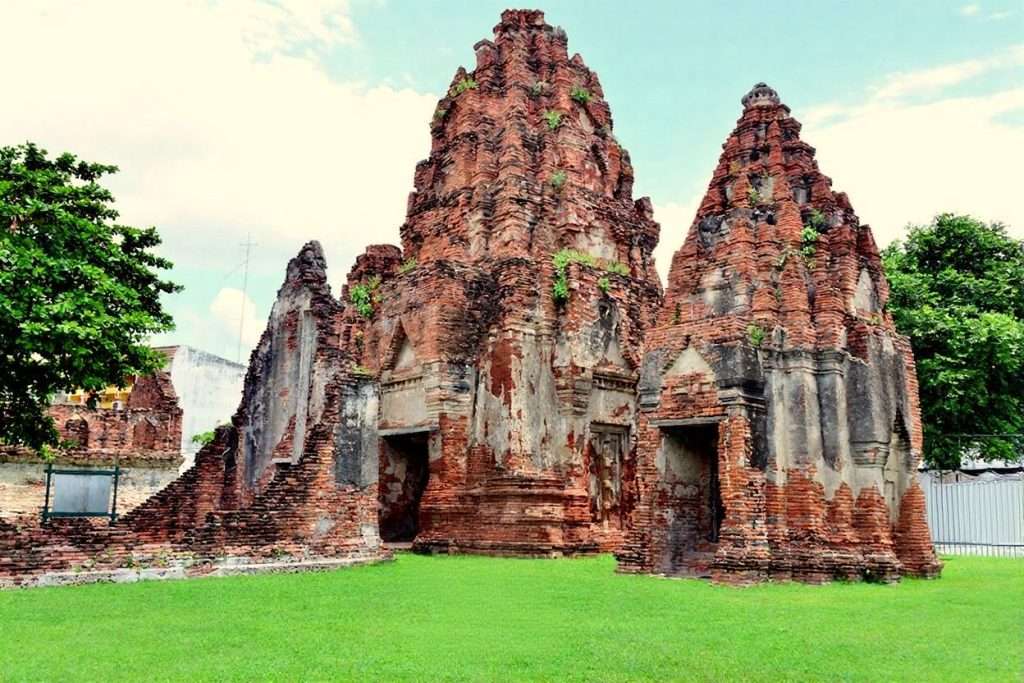
Prang Khaek’s exact construction date is uncertain, however given its architectural resemblance to other Angkorian temples from the Suryavarman II era, it has been proposed that the temple was built in the 15th century (c.1050 AD) or 16th century (c.1150 AD) of the Buddhist calendar. As a result, Prang Khaek is the oldest Angkorian temple in Central Thailand and Lopburi. It may have been built on the orders of regional chieftains or by royal command.
Khao Phraya Doen Thong

Khao Phraya Doen Thong is accessible by private vehicle, this hilltop location in Phatthana Nikhom Subdistrict provides expansive views of the mist-covered terrain, which resembles billowing clouds. Adorning the summit, a Buddha picture faces east, creating a tranquil backdrop against the stunning surroundings. The mist gives the scenery an ethereal character, and sunrise creates a lovely atmosphere. A 360-degree view of Phanat Nikhom District and the Pasak Chonlasit Dam railway water bridge below is also available to visitors.
Floating Train at Pa Sak Jolasid Dam

A unique, seasonal sightseeing train service, the “Floating Train” at Pa Sak Jolasid Dam operates on weekends from November through February. The railway bridge that crosses the enormous reservoir provides a unique experience by giving the impression that the train is floating on water, especially when the water level is high. Operating Season: November to February, usually only on weekends. (It runs until February for the current season). Departure: At 6:00 AM, the train (No. 921) leaves Bangkok Railway Station (Hua Lamphong). Highlights of the Journey: Around 9:20 AM, it stops at a picturesque overlook on the dam where passengers can take pictures for about 20 minutes. After that, it continues to the Khok Salung Railway Station, where guests can purchase One Tambon One Product merchandise.
Sap Lek Reservoir

Sap Lek Reservoir is about 260 hectares in size and is situated in Nikhom Saeng Tonne Eng Subdistrict, Mueang Lopburi District. It is a sizable reservoir with a rich history that dates back to King Narai’s reign. Thailand’s water supply system began when he ordered water to be collected from this reservoir for usage in the Narai Palace. Sap Lek Reservoir was utilised to store agricultural water under Field Marshal Plaek Pibulsonggram’s tenure. The province turned it as a natural tourism destination in Lopburi in 1977. Because Sap Lek Reservoir is adjacent to other Lopburi sites like Pa Sak Chonlasit Dam and Khao Chin Lae Sunflower Fields, visitors can see several places in one trip. There is also a viewpoint that you can consider to go up to with a view of Khao Chin Lae and the reservoir.
Lopburi Zoo

Asian and Australian birds and mammals are among the fascinating inhabitants of Lopburi Zoo. The peculiar family of three tigers and four dogs that coexist together in the same space is the zoo’s most striking feature. The zoo is situated next to Sa Kaew Circle, behind the Army Theatre.
This 25-acre zoo is well-known for its fascinating inhabitants, which include mammals and birds from Australasia and Asia. This zoo was built in 1940 as part of the prime minister’s effort to turn Lop Buri into a significant metropolis. But the zoo was deserted when his reign came to an end. The Special Warfare Unit took over in 1977 and renovated the zoo in collaboration with a number of clubs, vendors, and members of the public.
ChangNam Cafe and Restaurant

ChangNam Cafe Lopburi is a chic community-style cafe and restaurant where you can enjoy delicious Thai, Western and Asian food amidst nature. It it build on a man-made lake spanning more than 40 rai of water. Here you can spend a good afternoon fishing, kayaking or swimming. Many customers from other provinces visit this restaurant in the evening to see the beautiful sunset also they have varies personalise homemade cocktail.
Wang Kan Lueang Waterfall

Located in the Wangkanluang Arboretum in the Chai Badan District of Lopburi Province, Wang Kan Lueang Waterfall is a distinctive year-round waterfall and swimming area. It is renowned for its crystal-clear, emerald-green water, which originates from a naturally occurring subterranean spring rather than a mountain source. Large subterranean springs provide the water, which guarantees a steady flow throughout the year, even in the dry season. The waterfall is a well-liked location for swimming and picnics because it has several modest waterfalls. Picnics and swimming: Perfect for lounging, wading, and having picnics, especially since the falls’ mild slope makes it safe. The nearby arboretum offers hiking and short hikes. Beautiful photo opportunities are created by the distinctive limestone formations and crystal-clear water.
Wat Khao Wong Phrachan

Huai Pong Subdistrict is home to Khao Wong Phrachan, the highest peak in Lop Buri Province. Wat Khao Wong Phrachan, a temple known for its magnificence, is perched atop this mountain at an elevation of around 650 meters above sea level. To reach the pinnacle, a stairway climbs about 3,790 steps. The steep 1,680-meter stairway ascent from the foothills to the summit usually takes two hours. The path alternates between mild slopes and strong inclines and is surrounded by a variety of lush vegetation. According to legend, one must climb Khao Wong Phrachan’s 3,790 steps in order to demonstrate real love. Another popular temple worth visiting is Wat Tham Khao Prang
Rai Chamrat Sunflower Field

Rai Chamrat is located in Khao Chin Lae, Mueang District, Lopburi Province, Thailand. The country’s main hub for sunflower farming and tourism is Lopburi. The breathtaking vistas of the nearby Khao Chin Lae mountains and the enormous sunflowers are highly praised by tourists. The farm is a great place to take pictures. You can buy locally grown sunflower seeds, stroll among the fields, and take photos. ATV rides and kid-friendly horseback rides may also be available at several local fields. To enter the fields, you must pay a little maintenance or admission fee, usually about 20 baht. The chilly season, which usually lasts from November to January, is when Lopburi’s sunflower fields blossom. Another very popular sunflower field is Rai Khun Yai Som Poi or go along Phatthana Nikhom.
Wat Khao Somphot

Wat Khao Somphot is a tidy and serene temple inhabited by a hard-working community of young boy monks and nuns. The young monks playing football among the monkeys delighted the visitors. Despite the presence of bothersome monkeys that may carry rabies, the walk is noteworthy because of the temple’s fascinating statuary on the mountain’s summit and at ground level. While praising the tasty food at affordable pricing, some reviews cautioned about the cunning monkeys that frequently steal things from guests.
Lukson Chinese Shrine (The City Pillar Shrine)

The Lukson Shrine, also called the City Shrine, is located on Vichayhen Street. Baan Vichayen, a long-standing sacred site in Lopburi, is somewhat close by. These days, Thai-Chinese religious ceremonies are held there mostly.The City Shine, a stone block raised one meter above the ground, is located inside the 12-square-meter shrine. You may walk from Phra Narai Ratchanivet to Look Sorn Shrine by taking Phraram Street north for about 500 meters, or you can walk from Prang Khaek down Vichayen Street until you reach a junction, then turn right. Look Sorn Shrine is not difficult to find.


